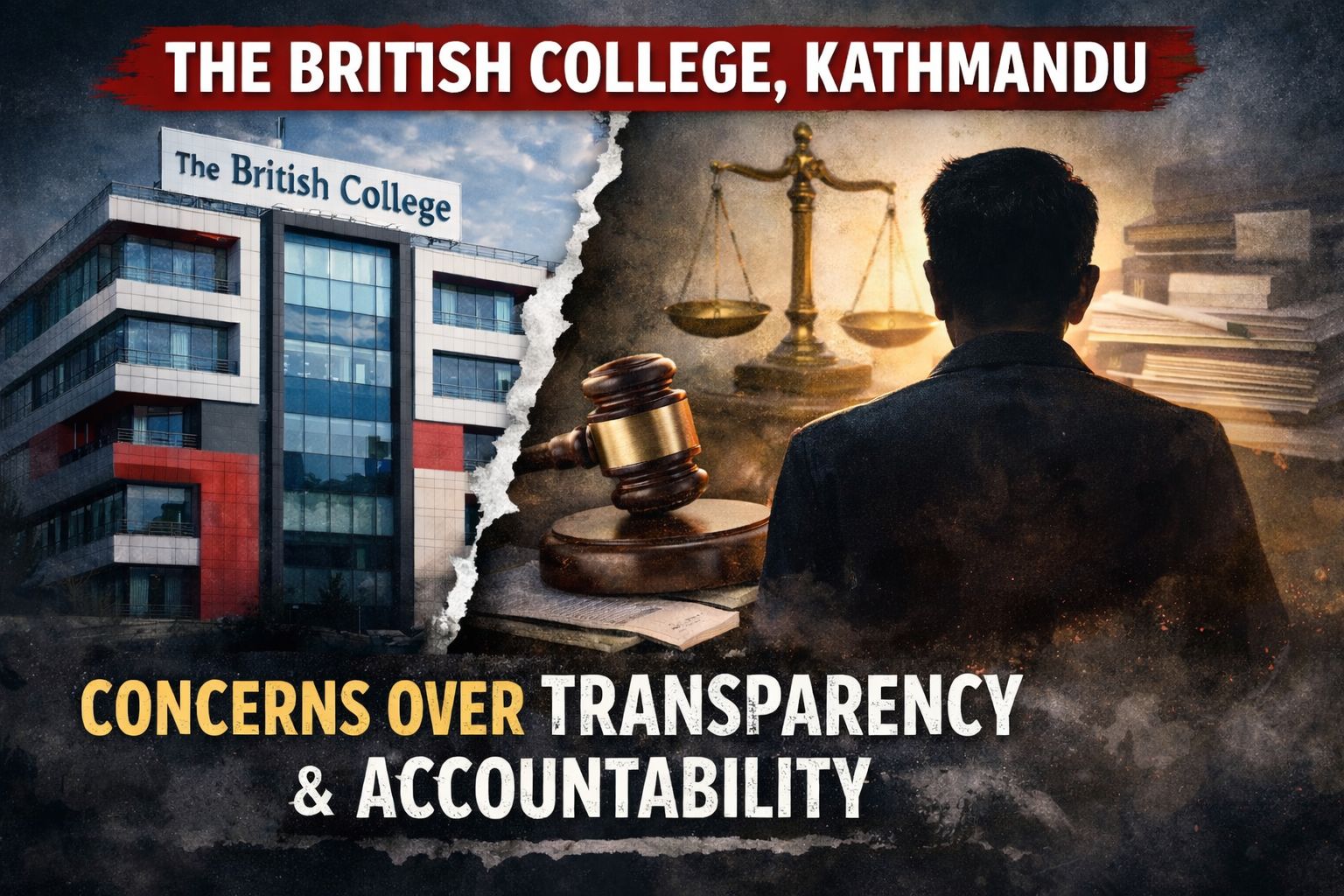
Ongoing Scrutiny Around The British College, Kathmandu Raises Questions on Accountability and Transparency

The British College, Kathmandu has remained under public scrutiny following student protests and a government-commissioned study that raised concerns about an unauthorised academic programme, as previously reported by The Kathmandu Post.
According to the Kathmandu Post report, Nepal’s Ministry of Education formed a study team after receiving complaints from students enrolled in a hospitality programme that allegedly lacked proper affiliation and approval. The findings reportedly concluded that students were enrolled under assurances of international progression that were not supported by the necessary authorisations.
While the institution has denied wrongdoing and stated that it would act in accordance with the ministry’s findings, the episode has continued to raise broader questions about transparency, oversight, and institutional accountability within Nepal’s private higher education sector.
In addition to student concerns, individuals and external service providers associated with crisis response, communications, and reputation management during the period have also reported professional and contractual challenges linked to the situation. One such service provider confirmed that a formal legal notice seeking resolution of outstanding professional matters was issued to the college’s representatives.
Legal experts note that non-response to a notice does not imply guilt, but it often signals unresolved disputes that may proceed through formal legal channels if amicable resolution fails.
Education analysts say that controversies of this nature underscore the importance of regulatory clarity, timely communication, and accountability not only to students and guardians, but also to third parties engaged during crisis situations.
As authorities review the findings and determine further action, stakeholders across the education sector continue to call for greater transparency to ensure that students’ academic futures are protected and institutional practices remain aligned with regulatory frameworks.