Tanaya Yadav smashes New World Record As Youngest Sangeet Prabhakar degree holder in Kathak Dance

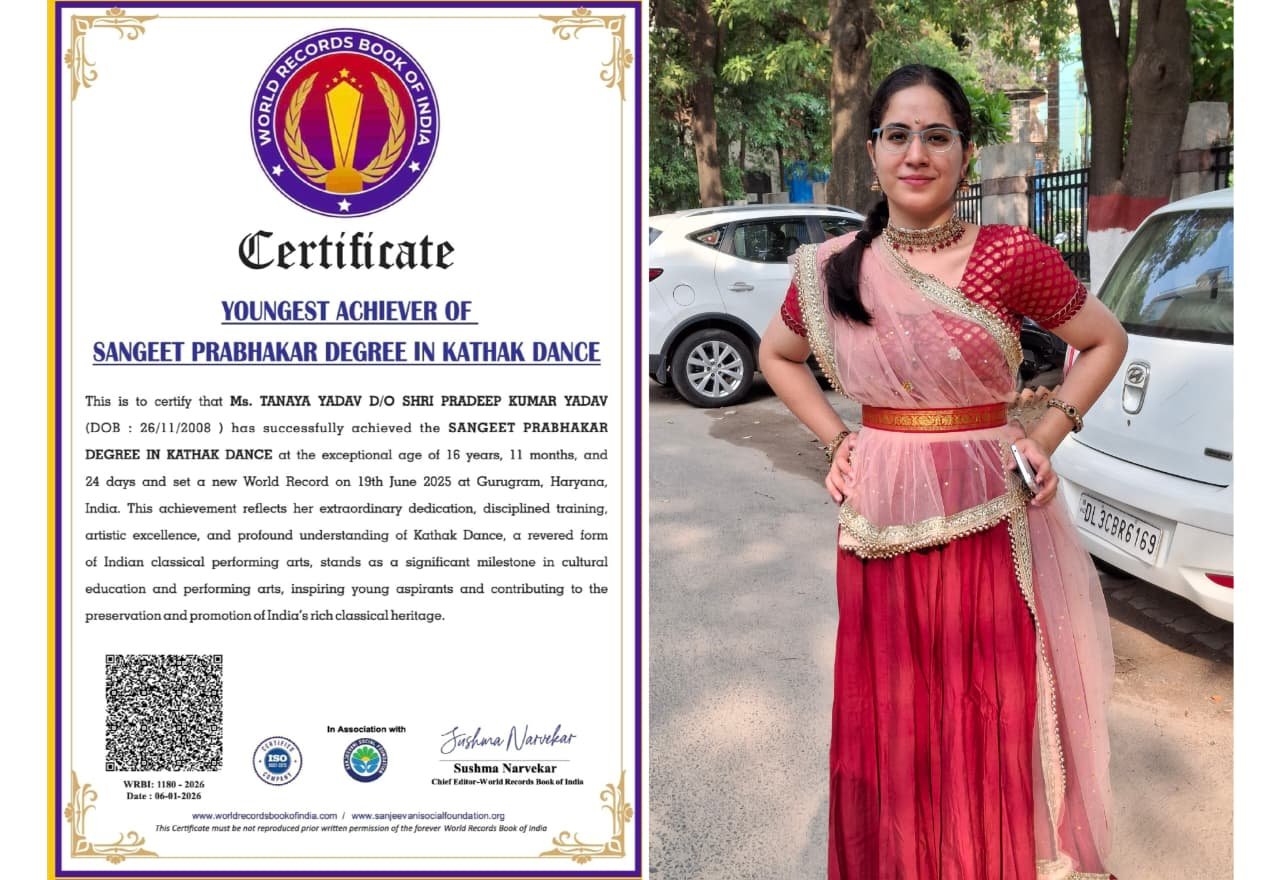
In a remarkable accomplishment for Indian classical dance, 16-year-old Tanaya Yadav from Gurugram has set a new world record as the youngest individual to earn the prestigious Sangeet Prabhakar degree. This achievement was formally recognized on June 19, 2025, marking an exceptional moment in Kathak, a discipline known for its demanding training and extended path to expertise. Originally from Jhunjhunu district in Rajasthan, Tanaya is the daughter of Dr. Pradeep Kumar Yadav, a distinguished Karate coach and acclaimed author.
Challenging Norms of Age and Mastery
At a time when many adolescents focus primarily on academics, Tanaya has secured a qualification akin to an undergraduate degree in the performing arts. Certified at exactly 16 years, 11 months, and 24 days old, she has established a global standard that has drawn widespread notice from cultural and academic communities. The Sangeet Prabhakar is awarded by the Prayag Sangeet Samiti in Prayagraj, one of India’s foremost authorities in classical music and dance, renowned for its stringent evaluations that test both technical proficiency and artistic interpretation.
The Demands of the Sangeet Prabhakar
Achieving the Sangeet Prabhakar requires rigorous preparation. The curriculum thoroughly examines various facets of Kathak, including tatkar (the swift, rhythmically precise footwork that forms the core of the dance), along with bols (intricate rhythmic patterns performed in exact cycles) and abhinaya (the expressive storytelling through gesture and emotion). Dancers usually invest years, if not decades, perfecting these components before pursuing this advanced certification. Experts regard Tanaya’s early attainment as not only noteworthy but truly outstanding.
Built on Rigorous Guidance and Practice
Tanaya’s success stems from consistent, dedicated training under her guru, Harish Gangani, a respected authority in Kathak and a key representative of the Jaipur Gharana. This school is esteemed for its focus on rhythmic sophistication, dynamic footwork, and narrative depth, drawing from a rich heritage passed down through generations. Gangani’s instruction has been pivotal in developing Tanaya’s skills in areas such as layakari (rhythmic variations), gat nikas (elegant postures and movements), and nuanced abhinaya. Those familiar with her progress emphasize that the emphasis was on building a solid, authentic foundation rather than aiming solely for records.
Kathak’s Heritage and Modern Significance
Kathak traces its roots to northern India’s ancient temple narratives, evolving into refined court performances. It integrates spiritual elements, physical vigor, and theatrical expression, demanding both stamina and emotional insight. In today’s world, classical dances face challenges in captivating younger audiences amid evolving habits and digital influences. Tanaya’s feat arrives at a pivotal time, as cultural bodies strive to reconnect youth with traditional forms. Her experience illustrates that, with committed training and insightful mentorship, classical dance can remain vibrant and appealing to the next generation.
Insights Shaped by Discipline
In reflecting on her journey, Tanaya highlights how Kathak fosters personal growth alongside technical ability. She credits the art with instilling concentration, reverence for heritage, and an appreciation for sustained effort. Observers remark on her maturity, forged through daily riyaaz (practice) and the duty of preserving a time-honored tradition. Her narrative is motivating numerous young dancers in India, particularly girls, who view her as evidence that aspirations can transcend age or origins.
Broader Acknowledgment and Influence
Tanaya’s record has extended beyond dance circles, garnering attention from educators, historians, and arts groups. It is seen as a hopeful sign for the sustainability of Indian performing arts, showing that high standards can thrive even in an era of fleeting digital content. Amid the growing recognition, her inner circle notes her continued dedication to artistic development over public acclaim.
Looking Ahead
As Tanaya Yadav advances in her Kathak pursuits, her accomplishment represents more than individual success. It underscores the enduring relevance of classical arts in modern India. It affirms that tradition and youthful energy can align effectively through careful nurturing and skilled direction. In a domain where proficiency is often gauged over decades, Tanaya’s breakthrough questions established timelines and prompts fresh discussions on talent cultivation, instructional approaches, and cultural preservation. In essence, her path stands as a compelling example that determination, supported by expert guidance, can make even the most challenging artistic endeavors achievable.